Welcome
Thank you for visiting. This brief introduction to my website serves as part formal biography, part a personal‑political statement, and also simply as an introduction to my work. Usually I write as a sociologist but occasionally instead as an essayist, so the tone of the posts overall varies according to issues under consideration. I hope you’ll find the ‘conversations’ interesting; please do add comments if you’d like to.
You can read this website in the language of your choice via Google Translate.
 I am an academic researcher / writer and Adjunct Professor at the Buehler Center for Health Policy and Economics, Northwestern University, Chicago (but I live in London). My work now focuses largely on the health and safety of children and vulnerable adults, gendered violence, and, particularly, female genital mutilation. I am a consultant sociologist and journalist who has extensively investigated female genital mutilation (FGM), as a long-time campaigner for its eradication.
I have authored several books and chapters, and many papers and presentations that address amongst other matters the global practice of FGM and efforts to end it. Most of this work is listed below. Over the years I have however also been deeply involved in other public and professional engagements, including environmental, regeneration, arts and diversity concerns, as I explain in what follows:
Does maternal FGM have inter-generational physiological impacts? Are children of women with FGM are more likely to be stunted or otherwise disadvantaged in health and development? This important but under-researched public health issue, particularly in regard to West Africa, highlights a major data gap: aggregated maternal FGM status is not often linked to children’s health records. FGM may affect not only women directly, but also their children’s growth and broader social and economic development. Focusing solely on women’s direct experience of FGM – absolutely essential though such a focus is – may miss wider implications for children’s futures and socio-economic policy.
This is an Opinion paper, published 16 July 2026, which I wrote for EC Gynaecology. The citation is Hilary Burrage. “Stunting? What Happens to Children Born to Women with FGM?”. EC Gynaecology 15.8 (2026): 01-04.
You can read this website in the language of your choice via Google Translate.

I have been exploring the literature on FGM and child stunting now for two years, but have been unable to find anything about the two topics together beyond occasional very brief asides. My own conjectures on the subject over those two years are here.
But conjectures are not enough for this really serious matter. Stunting causes major disruption to the lives of those who must endure it, and has significant costs for the communities in which they live.
FGM: Geopolitics (Precarious Economies, Water), Fragile Contexts, And Child Stunting. Some Questions
FGM must be understood within wider geopolitical and ‘fragile’ contexts — especially poverty, rural economies, migration, and water scarcity — rather than as isolated ‘cultural’ practices. Consideration is required of how these conditions (including economic precariousness, limited education, and gender inequality) sustain the practice. There are potentially important under-researched intergenerational impacts, particularly possible connections between FGM, maternal health, and child stunting. Interdisciplinary research and policies that integrate public health, economics, and gender analysis are needed. Why, we must ask, do such critical structural factors remain largely overlooked? We have some big questions. Who’s going to step up?
I presented this paper at the Colloquium on Female Genital Mutilation (FGM) at Lady Margaret Hall, University of Oxford, on 5 June 2026.
You can read this website in the language of your choice via Google Translate.
 Much has been learned over the past half-century about the violence against women and girls which is female genital mutilation (FGM). Less focus has been brought however onto the wider contexts of this harmful practice, or onto issues around the longer-term, inter-generational impacts on children born to women who have been ‘cut’. These are matters I examine in this paper, for the Colloquium on Female Genital Mutilation at Lady Margaret Hall, University of Oxford, on 5 June 2026.
The time has come to consider more closely geopolitical and ‘fragile’ or precarious contexts such as rural economies, and water, and inter-generational impacts such as likely child stunting. Why have these matters been so little investigated? And what might we learn if we delved further?
Gendered Harmful Practices (FGM, CEFM) Are A Public Health Crisis. Community Nurses Can Help Mitigate These Cruelties
Could community nurses in Italy, the UK, USA and elsewhere help reduce FGM, CEFM, and other gendered harmful practices by developing awareness of these dangers and spotting risk earlier? Are they well placed to notice warning signs in clinics, schools, and neighbourhoods without stereotyping communities, whilst supporting prevention through trusted conversations, safeguarding, and referral to specialist help? Can health providers do more to avoid “medicalizing” harmful practices; can they strengthen public-health delivery to end FGM and CEFM, thereby freeing resources for the delivery of other care?
I gave this paper on 13 April 2026 as a presentation for the Virtual Conference on Nursing Innovation & Reproductive Health (Rome, Italy: WINRH-2026).
It was also distributed by the Women’s UN Report Network, WUNRN, to their extensive international readership.You can read this website in the language of your choice via Google Translate.
 The Virtual Conference on Nursing Innovation & Reproductive Health (Rome, Italy: WINRH-2026) invited me to give a talk on 13 April on FGM (female genital mutilation) and CEFM (child, early and forced marriage). In dialogue with nurses, one approach might be to consider the various junctures at which FGM – and other harmful practices – are relevant to their normal work. My perspective here is Public Health, not the clinical treatment of FGM (I am a social scientist, not a clinician).
District and neighbourhood nurses can be the health and well-being ‘eyes and ears’ of their communities.
The risks of experiencing FGM, CEFM and /or other harmful practices are often dependent on contexts and circumstances. We consider here how nurses attending vulnerable communities, particularly in Italy, Britain and the USA, may play an important role in preventing or ameliorating such harms.
This is a concise, updated overview of female genital mutilation (FGM), explaining what it is, how it is classified, who performs it, and why the practice persists. It emphasizes that FGM has no health benefits and causes immediate, long-term, and social harms, while also discussing the challenges of data collection, prevalence estimates, legal responses, and debates over terminology and medicalization. Prevention must combine campaigning, education, community engagement, men’s involvement, and alternative rites of passage. Current progress is not keeping pace with population growth. FGM is a severe human rights abuse that requires urgent, sustained eradication efforts.
You can read this website in the language of your choice via Google Translate.
 Exactly, to the day, a decade ago I published the first version of this web-post, written for a lecture to medical post-graduates. I hope it remains useful as a straightforward guide to various important issues.
I have once or twice since made minor adjustments to this presentation, and I expect I will make more, but in essence matters remain much as they were – except that estimates of incidence have actually gone up (albeit because the number of young people globally has risen, not that a greater proportion of them have FGM).
So in a couple of matters I hope this paper is helpful:
Firstly, it is fairly comprehensive in covering the material available of a decade ago (when NB the internet was much different from today), including now-historical publications and links which informed perspectives at the time.
And secondly, this posting offers an opportunity, should anyone wish to take it, to debate the issues, to add their own thoughts on how the last ten years of work to end FGM have panned out, and/or to advise how progress should now be made. The Comments box below is yours to share your observations …
Afghan Women In Peril
Afghan women remain trapped under a harsh Taliban system that tightly controls education, movement, work, and even daily life. A recent House of Lords meeting stressed that excluding women from public life is damaging Afghanistan’s long-term development and deepening poverty. There is added danger for Afghan women and children in Iran, many of whom face deportation and uncertain futures. The situation comprises gender apartheid and the costs of sustained patriarchy and repression are severe.
You can read this website in the language of your choice via Google Translate
 Lord John Alderdice recently hosted a meeting in the House of Lords entitled Afghanistan: Towards Unity and Trust. I was pleased to attend. The speakers were from Women for Afghanistan, Independent Diplomat and similar organisations. The mood was sombre; the Taliban has not moved from its inhumane grip on the country and life for people living there is desperately hard, especially for women, every aspect of whose life, and even physical existence, is cruelly controlled.
Long-time experts in the field spoke at the meeting about plans for the future, and the hope which these plans may bring for the country as a whole; but for me personally two issues immediately struck home: the ‘visa break’ on study in the UK, and the fate of undocumented Afghan refugees in Iran.
I was pleased to join colleagues for a Zoom panel on FGM during the U.N. Commission on the Status of Women (CSW70), on 19 March 2026. I suggested that a successful anti-FGM campaign needs different arguments for different audiences, rather than one universal message. Does “social justice” resonate equally in every community, or are health, consent, law, and local power structures more persuasive in practice? Is ending FGM best understood as a shared team effort across survivors, activists, professionals, and policymakers?
You can read this website in the language of your choice via Google Translate.
 The eradication of female genital mutilation (FGM) is broadly driven by ‘programmes’ or ‘projects’, some extensive, largely professional outfits – perhaps even global – and others much more modest, maybe just a small group of volunteer campaigners in a remote location. However ambitious (or otherwise) the venture, there is usually an underlying premise that FGM is an obstacle to social justice. It must end, in part, because it damages the prospects for the potential victim of a fair future in which she can flourish.
It is this issue which I was invited discuss with colleagues in a Zoom event during the United Nations Commission on the Status of Women (CSW70), on 19 March.
For me, an educated Westerner, there is no doubt that FGM must be eradicated as soon as humanly possible; and one reason for this is the logic of social justice. It is only ‘fair’ that all children and adults have an equal opportunity to progress through life the best way they can, fully schooled and unencumbered by needless disadvantage. Avoiding FGM is one way, in communities where it previously occurred, to do so.
But one size does not fit all. Different societies and different cultures have different ways of understanding the world.
Is the apparent imperative, to avoid FGM, always as compelling to people in more traditional communities? Can appeals to justice and fairness fall flat because they comprise a rationale less significant than alternative (potential) insights, e.g., into the immediate connection between FGM and physical well-being, or perilous childbirth? Do appeals to end FGM fall flat when directed at powerful decision-makers for whom ‘women’s problems’ are a relatively inconsequential matter? Rationales for eradicating FGM may vary, as does urgency.
Can we even apply the usually persuasive assumptions about equity, fairness and justice to all efforts to end FGM? Given that total success in ending FGM is still far out of reach, I suspect the answer, the reality in some circumstances, is No, we can’t. Sometimes it seems such justifications are easy to ignore, whether by perpetrators or even policy makers.
Women In Iran: Past, Present And Future
What historical and religious forces have shaped women’s lives in Iran under the current despotic totalitarian, authoritarian theocracy; and how does patriarchy show up in governance, law, and everyday control of women’s bodies and choices? What role do compulsory hijab, gender‑based violence, and restrictive family laws play in sustaining male guardianship? Why is Iran so pro-natalist? Why do some women bear arms for the Revolutionary Guard, and Iranian women scientists excel globally, whilst women’s education, employment, and participation in public life is so constrained? How are some women resisting the regime, under slogans such as “Women, Life, Freedom”? What particular harms do Afghan and other migrant women and children experience in Iran? Could Iran’s highly polarised society move towards a more just and peaceful future for women, and for men, in the future?
You can read this website in the language of your choice via Google Translate.
 The situation in Iran, as at early March 2026, is dangerously volatile. Yet to many the complexities of Iranian governance, and the perspectives which underpin it, remain largely a mystery. For that reason I have for some months been researching this essay on ‘Women in Iran’, better to understand the perspectives which have given rise to the hard-line patriarchal order of the current autocratic theocracy. Particularly, I wanted to grasp more fully the differences in understandings between ‘modern’ educated women (and men) in Iran, and their traditionally religious peers.
In my essay here, Women In Iran: Past, Present And Future, I consider some ways patriarchy is experienced by women and girls in the authoritarian theocracy (bluntly, despotic totalitarianism) of Iran, where power is rooted in severe economic control and, at times, brute force.
Specifically examined through the lens of human rights, are issues around governance, demography and pro-natalism, employment, forms of marriage, children, social control via the hijab and gender-based violence, education, science, health and judicial processes. We consider also the increasing resistance to the constraints under which they are placed – evidenced (at whatever the cost) by the rallying cry ‘Women, Life, Freedom’ – of some, particularly, educated younger women. The especially perilous fate of Afghan migrant women and children in Iran is also discussed.
It is important to acknowledge however that the responses of Iranian citizens, female or male, to this authoritarian theocracy (despotic totalitarianism) are various – as indeed are the political, governance, legal, belief system and traditional factors which underpin the complexities to hand. There is little consensus between different groups in Iran about how the situation came about or how a future peaceable resolution acceptable to the majority might be achieved.
~ ~ ~ ~ ~
I completed this essay on International Women’s Day. My original intention had been to submit it for publication in an academic journal, but (given the extended period required for academic publishing) time for that is now not on our side. I therefore offer it, fully, formally referenced, and carefully advised by Iranian colleagues to whom I owe much thanks, to anyone who would like to know something more about the complex situation in which women and men in Iran now find themselves. Your thoughts are also very welcome, in the Comments box at the bottom of this post, below.
Please continue below to read the essay on this (translatable: Google Translate) webpost…..or click the link here to read the essay, Women In Iran: Past, Present And Future as an independently published paper.
Female Genital Mutilation Surgical Reconstruction: The Italian Perspective…. So Why Is Britain Far Behind Italy And France?
The UK is lagging behind Italy and France in offering FGM reconstructive surgery, even though the technical expertise already exists in the NHS. Reconstruction should be treated as survivor-led repair of injury, not cosmetic surgery; there are growing calls for a proper NHS pathway for women who choose it. Nonetheless, some survivors do not want surgery, and any treatment must involve informed discussion of options and outcomes.
You can read this website in the language of your choice via Google Translate.
 It was a privilege and pleasure to be invited to the Italian Embassy yesterday, 6 February 2026, for an event to mark the Global Day Of Zero Tolerance Against Female Genital Mutilation (FGM).
Distinguished Italian surgeons, both women and men, spoke about their work across Italy and in the UK. They told us how they use their training as plastic surgeons to repair and reconstruct genital damage inflicted on their patients by FGM. But why is Britain so far behind in this essential work?
This event, entitled ‘Investing in Care and Reconstruction‘ was promoted by the Embassy of Italy, London, in conjunction with the Italian Medical Society of Great Britain and SICPRE (Società Italiana di Chirurgia Plastica Ricostruttiva ed Estetica).
The post here explores some of the history and rationales which have informed clitoral reconstruction and similar surgeries in the UK, comparing that background with the story in Italy, France and various other countries.
Are ‘Anti-FGM’ Campaigns Harmful?
Criticism of anti-FGM campaigns often downplays the central issue: FGM itself is a serious violation of women’s and girls’ bodily autonomy and a source of major health harm. A recent academic paper is troubling because it shifts attention away from the practice’s damage and toward alleged harms of campaigning, language, and advocacy. Is framing FGM mortality data as exaggerated ever acceptable, given its status as a leading cause of girl deaths in practicing regions? Whilst strategies for eradication may be questioned, opposition to FGM is a basic human-rights and medical duty.
You can read this website in the language of your choice via Google Translate.
 What follows is my initial response, via the journal Gynaecology, to a recently published academic paper which many see as a backlash to women’s rights and entitlements. In September 2025 the Journal of Medical Ethics (JME), part of the British Medical Journal (BMJ) group, published an extended, multi-authored, essay entitled ‘Harms of the current global anti-FGM campaign‘. Initially unremarked, in December the essay began to be circulated everywhere, causing confusion and alarm in many quarters: people active in the #EndFGM field asked, how can this be serious? How can it have been published by the BMJ/JME? Gynaecology asked me for an Opinion piece…
The JME extended essay has now been very widely read (having 25 multinational authors helps…) and is long – verging on seven thousand words – but my Opinion piece here does not attempt to address all the matters arising from it, however sophistic some of the commentary may be.
Rather, I have focussed on the elemental message: that it is apparently acceptable to criticise flatly the language and action frameworks of eradicating FGM, thereby denying that this is a fundamentally dangerous and harmful practice; it is okay to critique bluntly the perceptions of those at the sharp end of trying to eradicate female genital mutilation. It is even, apparently, acceptable to assert that patriarchy is an irrelevance to FGM and other similar matters.
My Opinion piece in Gynaecology is available here: Are ‘Anti-FGM’ Campaigns Harmful? A hyper-linked version of it is below.
Female Genital Mutilation: What We Still Don’t Know … Socio-economics (Water, Land, Knowledge): The Global Backlash
What socio‑economic factors (such as women’s access to water, land, and literacy) do we still not understand well enough to reduce FGM sustainably; and how does the global backlash against women’s rights and autonomy affect efforts to end FGM? Are current responses dominated by a narrow framing that overlooks underlying misogyny and structural inequalities? Does distrust of science and medicine complicate advocacy and policy on FGM? What questions about local contexts, long‑term impacts, and effective interventions remain unanswered despite years of campaigning?
You can read this website in the language of your choice via Google Translate.
 Few would deny that we currently see a global backlash against women’s rights, status and autonomy. This has impeded work to support vulnerable women and to eradicate harms such as Female Genital Mutilation (FGM).
Addressing this issue, the final 2025 Female Genital Mutilation seminar at Lady Margaret Hall, University of Oxford, was an International Colloquium on Advocacy and Research on Friday 5 December with the theme The Global Backlash against Women’s Rights: Ending Violence against Women means Halting FGM.
My presentation at the event concerned a socio-economic perspective only infrequently employed directly in efforts to #EndFGM – taking a look at what we still don’t know about the ways FGM continues or may be abated longer term via factors such as women’s access to water, land and literacy / knowledge.
Is there a danger over the coming years that activists’ and others’ current hugely successful interventions to end FGM will fade from collective memory, to be replaced by the forces of reaction (and all that means for tolerance of violence against women)?
Will women and girls become vulnerable again? This is where others in society – everyone from politicians to public health leaders to media commentators – must step in to support, immediately.
At a time when the global zeitgeist is turning against humanitarian interventions these are issues which surely we need to consider?
The observations below are my attempt thus far to bring such concerns to the #EndFGM agenda.
IHPE Position Statement: Female Genital Mutilation (FGM)
The Institute of Health Promotion and Education recently updated its position on female genital mutilation, treating FGM as a harmful, rights-violating practice with no medical benefit. This aligns with international public health and human-rights views, emphasizing prevention, education, legal protection, and support for affected girls and women. The Position Statement frames FGM in broader social and gender terms: ending it requires not just law but sustained cultural, health, and policy change.
You can read this website in the language of your choice via Google Translate.
 The Institute of Health Promotion and Education (IHPE), of which I am a Trustee, has just published a new Position Statement on Female Genital Mutilation.
As lead author of that Statement on FGM, I was keen to ensure that it encompasses emerging thinking on this difficult subject, and that it also acknowledges the criticality of a Public Health perspective in addressing the complex and often variable issues.
Below is a link to the full, formal Position Statement, together with references and further links to important information about FGM and various ideas and indicators concerning how its eradication is now being approached.
What We Know About Female Genital Mutilation – A Summary
What is the global prevalence and scale of female genital mutilation (FGM) in the 21st century? How many girls are at risk annually, and what are the latest UNICEF estimates? What are the main types of FGM as classified by WHO? What immediate and long-term health risks does FGM pose, including mortality data? What economic costs are associated with FGM? How effective are current anti-FGM interventions and community opposition efforts? What socio-economic factors (e.g., water access, literacy) influence FGM persistence? Here are some answers to these still troubling questions:
You can read this website in the language of your choice via Google Translate.
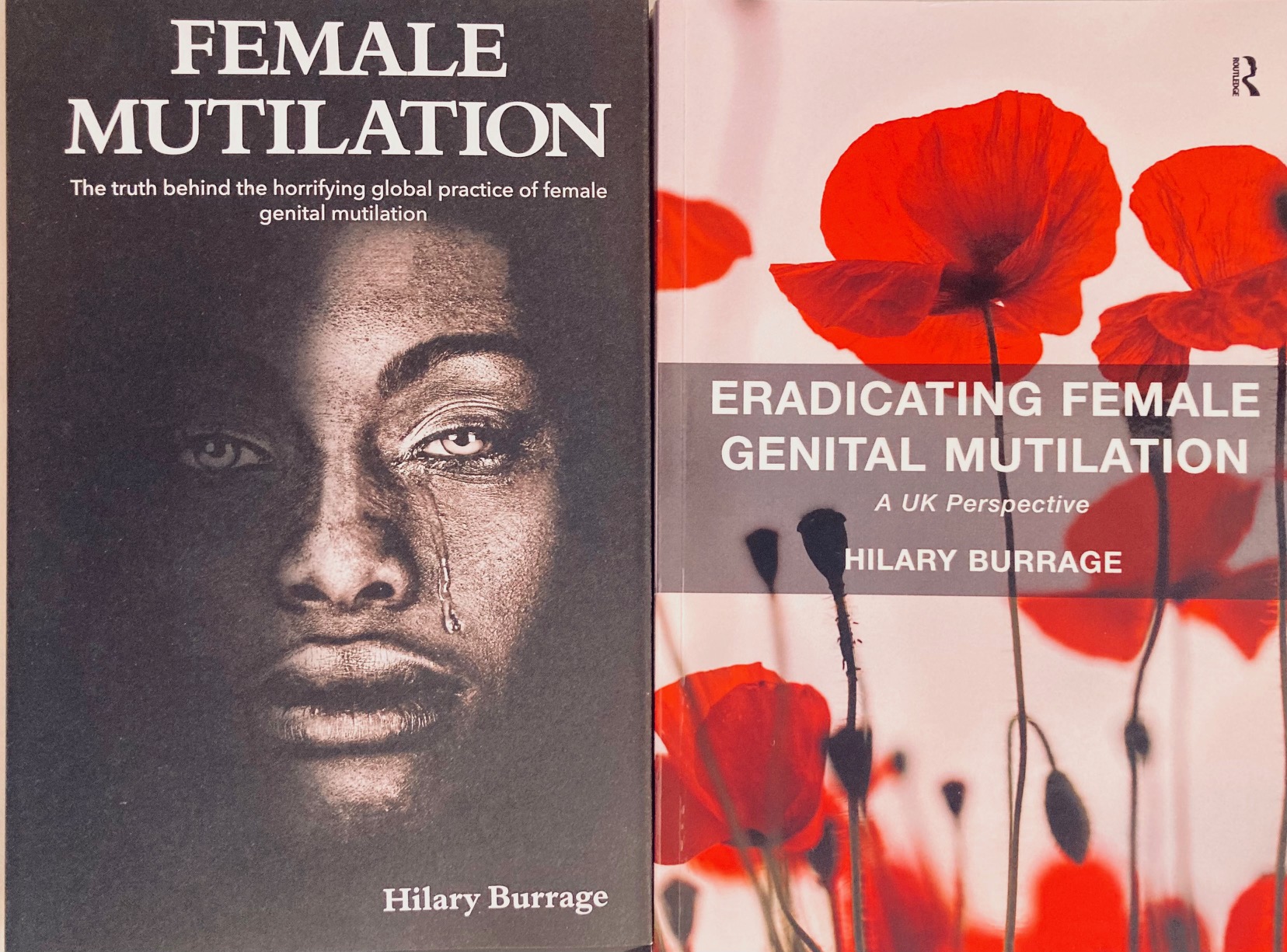
 Ten years ago this Autumn saw the publication of my Routledge textbook, Eradicating Female Genital Mutilation. Detailed knowledge and understandings of female genital mutilation have developed in some respects since then, but tragically the number of women and girls who have experienced this appalling cruelty has shifted only slowly, and the stark realities of FGM have not much changed. This briefing is an effort to summarise current facts and debates about FGM as we approach 2030, the date by which the United Nations insists that FGM be abolished.
I hope the condensed resume (which follows below) of what we currently know about issues around FGM will be helpful to those – perhaps teachers, journalists, students in the health, legal and wider social care professions, policy makers and concerned community members, maybe even some activists? – seeking a quick overview. I have also provided numerous weblinks for anyone wanting to explore particular aspects further, but summaries of this sort necessarily still miss many aspects of the matters to hand. I welcome any further suggestions and thoughts you as readers might like to add in the Comments (Reply) box at the end of this post. Thank you.
This webpost recounts Hilary Burrage’s pioneering 1971–72 empirical survey of women university teachers of natural science in the UK, describing how she became among the first researchers in Britain to systematically study “women scientists.” It reflects on the gendered landscape of higher education at the time, the barriers faced by women in science, and why such data‑gathering was novel and necessary. The piece also situates the survey within broader historical patterns of women’s under‑representation in senior academic science roles, highlighting how women were often steered away from research labs and into teaching or support roles.
You can read this website in the language of your choice via Google Translate.
 The story of how I became probably the first researcher in Britain to investigate ‘women scientists’ is perhaps a telling example of the confusions back then of higher education for first-generation female undergraduates like me. My initial degree studies in the late 1960s were in natural science, but I soon realised that the (then new and daring!) study of Sociology might be rather engaging. So I defected to the social sciences… and in 1971 got myself, as the only female student, onto a very-new-at-the-time Master’s course on the Sociology of Science and Technology.
So maybe now, half a century later, is a good time to share the overall results of my enquiries back in the early 1970s?
Segmenting The #EndFGM Message For Greater Impact – Climate Change, Conflict Displacement, Water, Child Stunting; And Powerful Men
Adapting the #EndFGM message is important amid budget cuts and repression. FGM’s economic and human costs, worsened by climate change, displacement, conflict, child stunting, and water scarcity, drive practices like early marriage for financial relief. Segmenting advocacy—tailoring hard-headed economic arguments for powerful (often male) leaders, beyond compassion appeals— may help to engage decision-makers prioritizing self-interest over humanitarian pleas.
You can read this website in the language of your choice via Google Translate.
 The 69th session of the Commission on the Status of Women took place at United Nations Headquarters in New York from 10 to 21 March 2025. Fortunately however some of the events brought together presenters from many parts of the world via Zoom (see below). Such is the panel in which colleagues and I spoke at 16.30 (4.30pm) EST on Thursday 20 March, our locations being France, Germany, Senegal, the UK and the USA. All of us addressed currently critical issues in ending FGM.
My own presentation, on which I offer some notes below, considered the severe economic and human capital losses arising from female genital mutilation (FGM), and the factors – amongst them climate change, socio-economic and conflict displacement, water and the disaster of child stunting – which may interplay in these losses.
The 2025 International Day of Zero Tolerance for Female Genital Mutilation (FGM), observed on February 6 every year since 2003, was initiated by Nigeria’s First Lady Stella Obasanjo. The scale of the FGM crisis is enormous: around 230 million women and girls affected globally in the mid-2020s, up from 100 million a decade prior, with 4.4 million girls at risk in 2024 (over 12,000 daily). FGM inflicts lifelong physical and mental harm via patriarchal control, so demanding determined enforcement of laws, ending medicalisation, community opposition, and more funding to eradicate it—efforts as vital now as ever.
You can read this website in the language of your choice via Google Translate.
 The International Day of Zero Tolerance for Female Genital Mutilation (FGM) (UN. nd) was introduced on February 6, 2003, by Stella Obasanjo, the First Lady of Nigeria and spokesperson for the Campaign Against Female Genital Mutilation, who made the official declaration on “Zero Tolerance to FGM” in Africa during a conference organized by the Inter-African Committee on Traditional Practices Affecting the Health of Women and Children (IAC. 2025).
This post is the fully referenced version of a paper I prepared which I was pleased then to have published as an Editorial on 4 February 2025 for the International Journal of Health Promotion and Education: International day of zero tolerance for female genital mutilation.
This is my January 2025 submission to UN Special Rapporteur Reem Alsalem on emerging issues in sex-based violence against women and girls (VAWG). It focuses on female genital mutilation (FGM) as an extreme form of patriarchal control over female bodies, affecting 230 million girls and women globally—a 15% rise since 2016 due to population growth. FGM persists regardless of “gender” identity, targeting biological females in traditional communities where sex roles dominate; deviations invite punishment. Critical issues include vulnerabilities in conflicts, humanitarian crises, and poverty, all demanding better state-level protections, education for girls, and access to clean water to boost women’s autonomy. Survivors often advocate for eradication, but resourcing remains critically low (e.g., 0.12% of humanitarian funds)
You can read this website in the language of your choice via Google Translate.
 The United Nations Special Rapporteur on violence against women and girls, Ms Reem Alsalem, recently invited interested parties to submit evidence and observations on new frontiers and emerging issues in sex-based violence against women and girls.
I have been considering such matters in regard to female genital mutilation (FGM) for a while, and have just submitted some thoughts (below) to meet the deadline of 30 January 2025.
My response here to the enquiries of the Special Rapporteur re new frontiers and emerging issues in VAWG refers, largely in sequential order, to some of the questions she poses in her invitation to consider the matter as above. I hope the issues and questions I have raised are helpful.
Below is my particular response to the call for evidence by Ms Alsalem. Her entire report on Special Rapporteur on violence against women and girls, with all submissions including mine (as immediately below), was published on 4 July 2025.
Clean Air + Green Planet = Good Health For All
This post highlights a WHO publication from a 2023 European conference. It notes that 1.4 million deaths yearly in the WHO European Region link to environmental risks like pollution and climate change. London’s ULEZ success—95% of vehicles compliant in 2023 vs. 39% in 2017—shows clean air reduces children’s asthma and seniors’ dementia, yet such gains get little media attention. More use needs to be made of the WHO Global Health Observatory data (2025) for policy and debate, stressing that environmental health benefits all by curbing diseases like heart issues, cancers, and strokes.
You can read this website in the language of your choice via Google Translate.
 This very straightforward slogan is in fact the title of a WHO publication about a European conference held on 5 July 2023. The passage it headlines tells us that ‘Each year, across the 53-country WHO European Region, an estimated 1.4 million deaths are linked to environmental risk factors, such as pollution and climate change.’
Below is a short piece I wrote about this issue for the (free subscription) January 2025 Newsletter of the Institute of Health Promotion and Education, of which I am a Trustee….
Seasonal Flu, RSV And Covid: UK Vaccination Rates Plummet, Including For Health Workers, Whilst Emergencies Rise
UK hospital admissions for flu, RSV, norovirus, and COVID surged at the end of 2024, with 4,469 daily flu patients in England. Vaccination rates have plummeted: 33% of pregnant women, 37% of at-risk groups, and 73% of over-65s got flu shots; frontline health workers dropped from 76.8% in 2020-21 to 42.8% in 2023-24. Reasons include low risk perception, safety concerns, and mistrust; officials urge eligible groups, especially HCWs, to vaccinate amid the NHS crisis. But one critical question persists: why are some health professionals, who have seen first hand the devastation these infections can inflict, still vaccine averse?
You can read this website in the language of your choice via Google Translate.
 Reports show that flu, respiratory syncytial virus (RSV) and viruses such as norovirus – as well as continuing cases of Covid – are impacting seriously on hospital admissions as of the last week of 2024 and the start of 2025. Figures from NHS England have revealed there was an average of 4,469 flu patients in hospital in England every day in the last week of December 2024. I wrote a short piece about this issue for the (free subscription) January 2025 Newsletter of the Institute of Health Promotion and Education, of which I am a Trustee….
My IHPE blog is below, followed by some thoughts on the striking drop in vaccination rates also of clinicians and other health care workers.
Challenges To Eradicating Female Genital Mutilation: Activists, Officials, Adulthood, Men, Water, Subsistence And Dangers
Challenges to ending female genital mutilation (FGM) persist despite global efforts. Core obstacles include lack of top-level political accountability in multi-agency approaches, with no clear leadership or shared framework for action. Cultural relativism and accusations of Western imperialism hinder progress, economic barriers, like poverty among subsistence farmers, limits women’s empowerment. Insufficient support for local advocates undermines grassroots work. Broader public health, education, and economic strategies are essential beyond legal/clinical focus. Accurate data and a need for long-term evaluable interventions remain critical. As per my recent textbook chapter, consolidated progress depends on combining local advocates, clear leadership, education, health support, and wider social justice efforts, not on law or medicine alone, but considering everything from water and local terrain to the attitudes and understandings of men in positions of community or wider influence and power. FGM Studies requires a multitude of perspectives.
You can read this website in the language of your choice via Google Translate.

The difficulties we (all) face in trying to #EndFGM have concerned and deeply engaged me for several years. Why is it such a tough assignment, regardless of continent, location or ‘culture’?
My guess, as a sociologist, is that despite the admirable efforts of many campaigners and workers we have yet to look as hard as we might at all the contexts in which FGM occurs, and in which we seek to eradicate it. There must surely be underlying realities and life experiences which continue unobserved to shape people’s understandings of the interactions, meanings and impacts of FGM.
It was good therefore to be invited to speak at the Research Colloquium on Female Genital Mutilation, at Lady Margaret Hall, University of Oxford, on 9 December 2024. The focus of the event is reflection on the Routledge International Handbook of Harmful Cultural Practices (2024, eds. Jaschok, Jesmin, Levin von Gleichen & Momoh), in which my chapter (12) was ‘FGM STUDIES Economic, Public Health and Societal Well-Being’. In this 9th December Oxford research colloquium presentation I focus on aspects of ending FGM which lead us to consider difficult wider issues.
The ideas below on the socio-economic and environmental contexts of FGM and its eradication are what I want to share:
Female Genital Mutilation (FGM) in Context: A Guest Editorial
In this guest editorial I frame female genital mutilation (FGM) as a deep‑rooted form of violence against women and girls, practised on about 230 million women worldwide, that entrenches gender inequality and harms health across the life‑course. Lasting eradication requires three pillars: grassroots advocates with lived experience, an enforceable legal ban on FGM and other violence against women, and a socio‑economic system that enables women’s autonomy through education, income, and freedom to choose. Change must engage whole communities, including men, and connect FGM to wider public‑health and economic issues, as illustrated by women in The Gambia who prioritised basic dignity such as chairs as a step towards adult agency.
You can read this website in the language of your choice via Google Translate.
 I am pleased that this brief overview of the complexities of ending FGM was today published as a Guest Editorial in the Journal EC Gynaecology.
Many talented, brave and committed people continue to work for the eradication of FGM, but we are not by any means there as yet.
Below I explore a few possible aspects of this continuing challenge.